
Why Your Katy Yard Floods After Every Storm
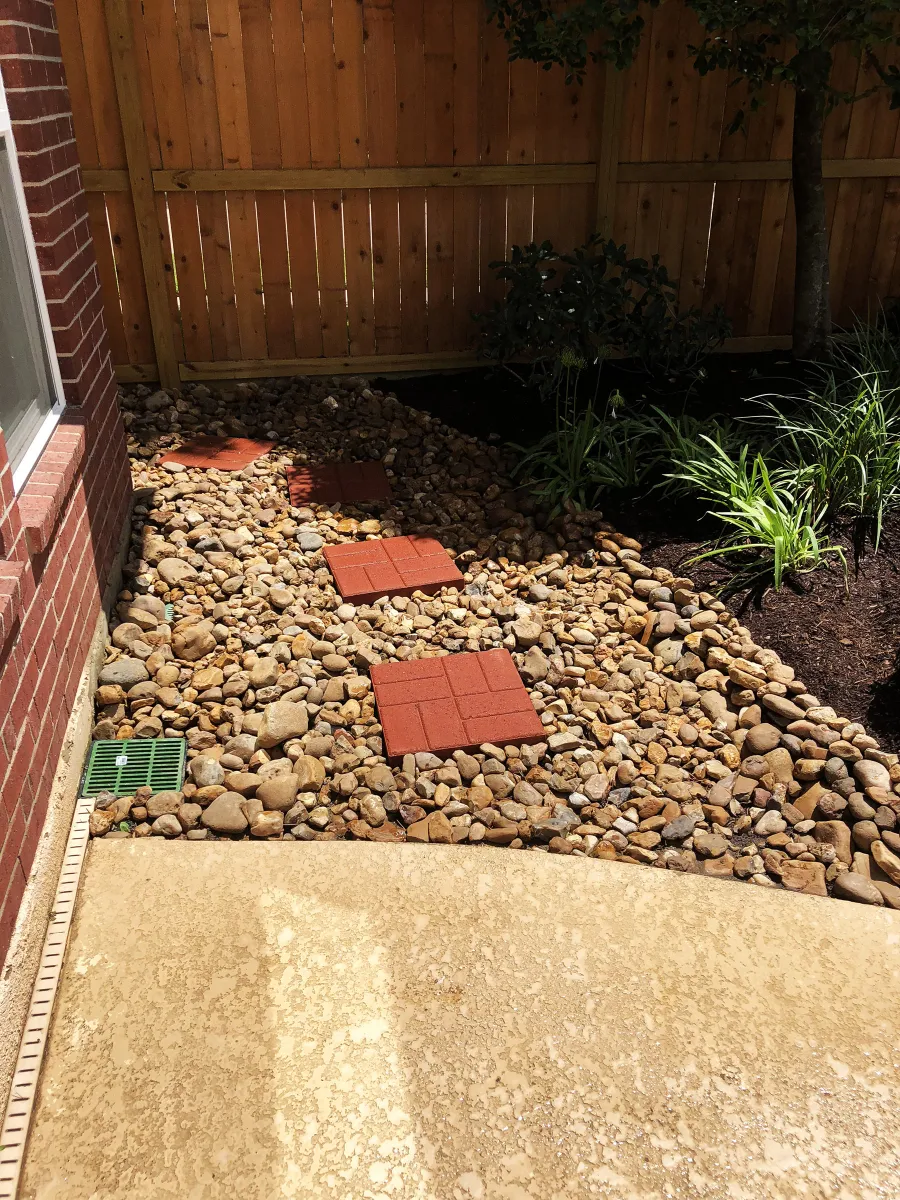
If your yard still has puddles two days after a storm, that is not bad luck and it is not something that dries out on its own. It is a drainage problem, and in this part of Texas it usually comes down to the same handful of causes.
We have been fixing wet yards in Katy since 1989, and the pattern rarely changes. Understanding what is actually happening under your grass makes it a lot easier to decide what is worth spending money on.
The soil here does not drain, and that is normal
Most of Katy sits on heavy clay. Locals call it gumbo, and the name is earned. When it is dry it sets up hard enough to crack. When it gets soaked it swells shut and stops taking water almost entirely.
That matters because a lot of drainage advice written for other parts of the country assumes water will soak in given enough time. Here it will not. Once the top few inches are saturated, everything that falls after that has to travel somewhere across the surface. If nothing is directing it, it collects in the lowest spot in your yard and sits there.
This is also why a yard can drain fine for years and then suddenly stop. It does not take much settling, a new patio, or a neighbor regrading their lot to change where the water wants to go.
Four things we look for first
When we walk a yard with standing water, we are usually checking the same short list:
Where the water actually comes from. Roof runoff is the one people underestimate. A decent-sized Katy roof sheds a startling amount of water in a single storm, and if the downspouts dump right at the foundation, that is thousands of gallons landing in one spot. Sometimes fixing the yard starts with moving the gutters.
Whether the grade works against you. Yards should fall away from the house. Plenty do not, either because they settled or because a flower bed got built up over the years until it became a dam holding water against the slab.
Where the low point is. Every yard has one. The goal is not to eliminate it but to give it somewhere to send water.
What is already installed. We find a lot of old drain lines that are crushed, disconnected, or packed solid with silt and roots. A drain that was never maintained is not draining anything.
What actually fixes it
There is no single answer, which is why we walk the property before quoting anything. But the fixes generally fall into a few categories.
Routing the water. Most of our drainage work is about giving water a defined path off the property instead of letting it wander. That can mean river-rock beds that carry runoff along a fence line, or routing around a patio or pool deck so the hardscape is not sitting in it.
Regrading. Sometimes the answer is dirt, not pipe. Reshaping the fall of the yard so water moves the direction you want is often cheaper and lasts longer than adding another drain.
Working with the landscape instead of against it. This is the part that gets skipped when drainage is treated as a separate trade. Beds, plant choices and irrigation all affect how a yard handles water. We would rather design the drainage into the yard than bolt it on afterward and end up with a lawn full of grates.
Why you should not wait on it
Standing water is annoying, but the reasons to deal with it are less about appearance than people assume.
Water that sits against a slab is working on your foundation, and foundation repair in this area is not cheap. Beds that stay saturated will kill plants that would otherwise be fine here, usually slowly enough that people blame the plant instead of the drainage. And standing water breeds mosquitoes within a few days, which is its own reason to care in a Gulf Coast summer.
The other thing worth knowing is that drainage is cheapest to fix when it is addressed on its own schedule instead of during a crisis. After a major storm every drainage contractor in the region is booked.
Two mistakes that make it worse
The first is treating a low spot by filling it in. It feels like the obvious fix, and it moves the problem rather than solving it. Water that used to collect in a known place now collects somewhere else, often closer to the house. Unless the fill is part of a deliberate regrade that gives the water somewhere to go, it usually buys a season.
The second is adding drains without checking where they discharge. We have pulled up plenty of drain lines that ran twenty feet and stopped, or that emptied into a spot lower than the outlet so they stayed full of water permanently. A drain is only as good as its exit. If there is nowhere legal or practical for the water to go, the answer might be surface routing or regrading instead.
Both mistakes come from the same place, which is treating standing water as a spot problem instead of asking where the water comes from and where it should end up.
How to tell if you actually have a problem
A simple test: go look at your yard about 24 hours after a decent rain. Grass that is soft underfoot is fine. Visible standing water, soggy spots that never firm up, or a waterline stain along the foundation means water is not leaving.
Also worth checking after a storm: whether your downspouts are discharging into a drain or just onto the ground, and whether any existing drain grates are actually taking water or sitting full.
If you are seeing any of that, it is worth having someone look at it. We do free consultations and we will tell you honestly if what you have is a small regrade rather than a full drainage system. Plenty of yards need less work than homeowners expect.