
Plants That Actually Survive a Katy Summer
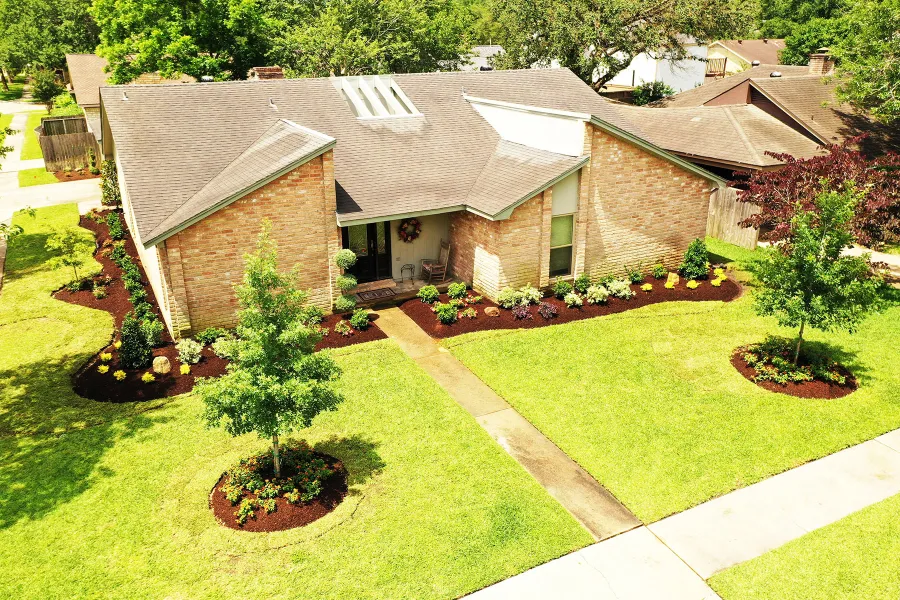
Almost every struggling flower bed we get called out to look at has the same story behind it. The plants were healthy at the nursery, they went in the ground correctly, and they still died in July. The problem is usually not care. It is that the plant was never going to work in that spot.
What a Katy summer actually does to plants
It is not only the heat. Plenty of plants handle high temperatures. What breaks them here is the combination.
We get sustained heat with high humidity, which stresses plants that need air movement and encourages fungal problems in anything crowded. We get intense afternoon sun that is meaningfully harsher than morning sun of the same reported temperature. And we sit on heavy clay that holds water after a storm and then bakes hard between them, so roots swing between soaked and starved.
A plant tagged "full sun" at a national retailer was rated somewhere. It may not have been rated here.
Sun exposure is not one thing
This is the single most useful idea for anyone planting in Katy, and it is why we walk a yard before recommending anything.
Morning sun and afternoon sun are different growing conditions. A bed on the east side of a house gets several hours of gentle light and then shade through the worst part of the day. A bed on the west side takes direct sun exactly when the temperature peaks and the reflected heat off brick and concrete makes it hotter still.
The same plant can thrive in one and cook in the other, twenty feet apart on the same property. Add a mature oak and you get a third condition entirely, dry shade, where the tree takes both light and most of the available water.
That is why our design process starts with walking the yard and looking at conditions rather than picking from a catalog. Where the light falls, what is holding water, what the mature trees are already claiming.
How to think about choosing
Rather than a plant list that will not fit your yard anyway, a few principles that hold up here:
Favor things that are already thriving nearby. If a neighbor two doors down has a shrub that looks good in August without obvious fussing, that is better evidence than any tag.
Give plants their mature size. The most common mistake we see is planting for how it looks the first year. Crowded beds have poor airflow, which in this humidity means disease, and a shrub fighting for room is a stressed shrub.
Group by water need. Putting a plant that wants to dry out next to one that wants steady moisture guarantees one of them is unhappy no matter how you run the irrigation.
Fix the soil before you plant. Dropping a plant into unamended gumbo clay is planting into a bathtub. Bed prep is unglamorous and it is most of the difference between a bed that fills in and one that limps.
Irrigation is part of the plant decision
This is where being both a landscaping crew and a licensed irrigator changes the answer.
Beds and lawn have genuinely different water needs, and a system that waters them on the same schedule will overwater one or underwater the other. We see beds that get blamed for bad plant choice when the real problem is a zone dumping lawn volume onto shrubs, or a head that got blocked by a plant that grew into it.
Before assuming a plant failed, it is worth running the zone and watching where the water actually lands. A surprising number of struggling beds are simply not getting watered, or getting watered far more than intended.
Getting new plants through their first summer
Even a well-chosen plant can die in its first season here, and it is usually a watering problem in one direction or the other.
A newly planted shrub has a root ball roughly the size of the container it came in. Until roots move out into the surrounding soil, that small volume is all it can draw from, and in clay that can mean the surrounding bed is damp while the root ball itself has gone dry. Watering at the base rather than broadly over the bed matters more in the first few months than most people expect.
The opposite failure is just as common. People see a new plant wilting in August heat, assume it is thirsty, and water it daily. In clay that keeps the root zone saturated, roots suffocate, and the plant wilts more, which invites more water. Afternoon wilting in extreme heat is often a plant protecting itself rather than a plant that is dry. Check the soil a few inches down before adding water.
Deep and less frequent beats shallow and daily. It encourages roots to go down looking for moisture rather than staying near the surface where the heat is worst.
Planning for August, not April
Nurseries are full in spring and everything looks good. The useful question is what the bed looks like in the third week of August.
That usually means leaning on structure that holds up year round, shrubs, ornamental trees, defined borders, and treating seasonal color as an accent rather than the whole plan. Mulch matters more than people think, both for holding moisture and for keeping soil temperature down. Beds that get a fresh layer each year hold up noticeably better through late summer.
It also means being honest about the spots that are genuinely hard. Some corners of some yards are difficult, and the answer might be a bed of stone and a couple of tough specimens rather than an annual replanting.
If you have a bed that keeps failing and you are tired of replacing it, we are happy to walk it with you and tell you what we think is actually going on. Free consultation, and sometimes the answer is that the bed needs less than you expected.